What Preconstruction Settles Before Ground Breaks
The cheapest problems on any commercial project are the ones found while the work is still on paper.
October 14, 2026 · 4 min read
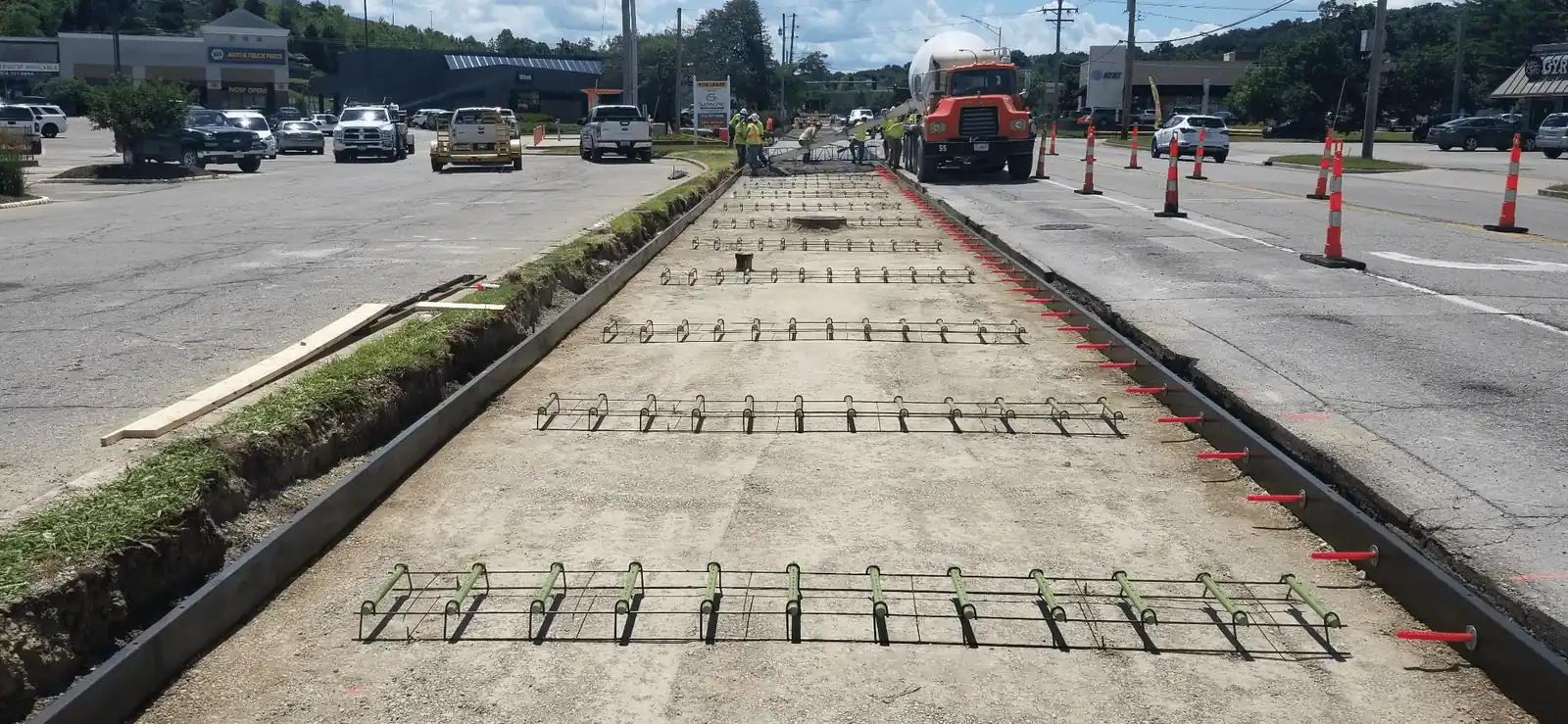
Most of what goes wrong on a commercial job is decided before anyone mobilizes. A budget that was never tested against the drawings. A schedule that assumed the steel would show up on time. Two trades who each thought the other owned the opening through the wall. Preconstruction is the stretch of a project where those problems are still cheap to find.
Raineri Construction keeps a Director of Pre-Construction on its leadership roster for exactly that reason. It is a named role, not a task handed to whoever has a free afternoon. What follows is what an owner should expect to get out of that phase, and what to ask for if a contractor is vague about it.
A budget you can test
An early number is only useful if you know what it is built on. A good preconstruction team prices from the actual drawings, writes down what it assumed where the drawings are silent, and tells you which line items carry the most uncertainty. Raineri describes its approach as developing and driving budgets, schedules, and job-site coordination, and the word driving matters. The budget gets managed against the design as the design changes. It does not get filed away after the first estimate.
Ask to see the assumptions and exclusions in writing. Then ask what the team would change if you needed the number to come down. Value engineering done early costs a conversation. Done after bids are in, it can cost a redesign.
A schedule with the logic showing
A schedule is a set of dependencies, not a set of dates. Detailed scheduling is one of the eight practices Raineri lists in its process, and preconstruction is where long-lead items, utility work, inspections and owner decisions get placed in order. If a switchgear or storefront package takes months to arrive, the approval clock has to start long before that trade is on site.
Owners often have dates that cannot move: the first day of a school year, a lease commencement, a funding deadline. Tell the team on day one. A schedule built backward from a fixed date looks very different from one built forward from a notice to proceed, and you want to learn that while there is still room to adjust.
Constructability: building it on paper first
Constructability review is a plain idea. Experienced builders read the drawings looking for what will be hard to build, hard to sequence, or hard to inspect. Can the crane reach the pick? Does the ceiling height survive the duct run? Is there anywhere to stage material on a tight urban lot? Those questions cost almost nothing to settle at a conference table and a great deal to settle in the field.
On the civil side the questions change but the habit does not: access for equipment, traffic phasing, utility conflicts, the order of pours or paving. Raineri builds both buildings and civil work, so the habit of asking these questions first applies on both sides of the company.
Trade coordination before the trades arrive
Raineri describes combining its in-house tradespeople with flexible but strategic trade partnerships. Whatever the mix on a given job, someone has to decide who is on site when, who hands off to whom, and where one trade's work stops and the next begins. Preconstruction is when scopes get leveled, so that an item is neither priced twice nor missed entirely.
Gaps between scopes are one of the classic sources of change orders. Leveling bids line by line is tedious, unglamorous work, and it is precisely what this phase is for.
What to ask your preconstruction team for
You do not need to be a builder to hold this phase accountable. A short list of deliverables is enough:
- A written budget with its assumptions and exclusions spelled out
- A schedule that shows long-lead items, owner decisions and inspection points, not only construction durations
- A constructability review with the questions it raised and how each one was answered
- A bid-leveling summary showing how trade scopes were compared
- A named person who owns the handoff from preconstruction to the field
If a contractor cannot hand you most of that list, the work may be happening in someone's head instead of on paper. That is fine until the person with the head is busy on another job.
Handing it to the field
A good preconstruction phase ends with a clean handoff. The people who built the budget and the schedule should walk the project team through both, including the risks they flagged along the way. Raineri puts a single on-site point of contact on its projects, and that person should arrive already knowing why the plan looks the way it does.
It is also the moment to confirm how you will see progress. The project portal, the meeting rhythm and the reporting format are all easier to agree on before the first truck shows up than after the first disagreement.
If you are planning a building or civil project in the St. Louis area and want to talk through what preconstruction would cover, call the Raineri office at (314) 667-5913 or reach the team through the contact page.
Raineri Construction, (314) 667-5913
Call (314) 667-5913